

Psychological Flexibility: A Critical Skill for Case Managers
I was reading a post from a friend who is battling cancer. He talked about psychological flexibility. As I have not heard this term before, I did a little digging. In this article, I wanted to share what I learned and how nurse case managers can use this skill to be...

Celebrating National Nurses Week
If you know a nurse, take a moment during National Nurses Week to call, text, or email them and simply say thank you. Small gestures of appreciation can mean more than you realize. These continue to be stressful times across every area of nursing practice. Yet nurses...

$5 Trillion and Counting: Why U.S. Healthcare Falls Short—and the Critical Role of Nurse Case Managers
The United States spends nearly $5 trillion annually on healthcare—more than any other nation in the world. Yet despite this staggering investment, the country consistently ranks near the bottom among developed nations in key measures such as life expectancy, chronic...
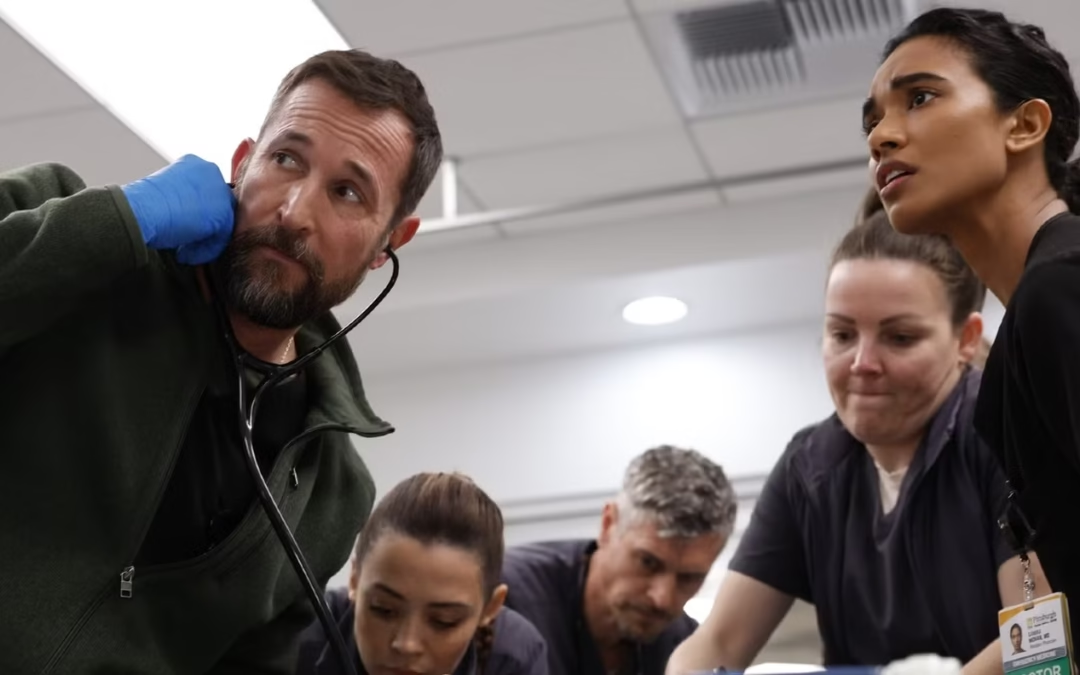
Watching The Pitt as a Former ER Nurse: The Truth Behind the Chaos
I just finished watching season 2 of The Pitt. If you have been watching it, I know you are trying to take in all the issues that were presented and what was left hanging for season 3. If you did not see it, you can stream season one and season 2 on HBO/Max. The Pitt...

Negotiation Lessons from the World Stage: What Case Managers Can Learn About Tone, Trust, and Win/Win Outcomes
Negotiation is one of the core skills nurse case managers rely on every day. Whether we’re coordinating care, advocating for services, or helping families navigate complex systems, we spend a surprising amount of time in conversations where emotions run high, and...
Tips for How Workers’ Compensation Nurse Case Managers Can Prepare for Major Cuts to Rural Healthcare Resources
Healthcare in general is undergoing a profound transformation—in this article, I wanted to look at an area many of us don’t think about because we live in an urban or suburban area. Rural areas across the country are set to be hit the hardest as the Big Beautiful Bill...
Celebrating Holy Days
Passover and Easter are both springtime religious holidays that celebrate liberation, renewal, and hope. Passover marks the Jewish people’s freedom from slavery in Egypt, while Easter celebrates Jesus’ resurrection in Christianity. Both holidays emphasize themes of...

When the Waiting Room Becomes the Hardest Part of Healthcare
Most of us are used to waiting for things — in line at the grocery store, at a red light, or for the coffee to finish brewing. How much waiting each of us can tolerate is deeply individual. But waiting in a healthcare setting is a different kind of waiting. It carries...

Tips for Being Your Own Best Advocate – Be An Active Member of YOUR Team
Using patient portals is a critical part of care coordination and helping the patient be an active member of their team. So why are they so difficult to use as compared to other industries? Think about other systems you have learned how to use over the past few...

Who Is Responsible for the Care Coordination of YOUR Health and Healthcare? YOU.
In theory, your primary care physician (PCP) is the quarterback of your care. Managed care was designed so that every person had a PCP who knew them, followed them over time, and helped manage their health. In return, the managed care company paid the PCP a...

Part Two: Discharge Planning: A Deeper Dive with Advanced Considerations to Improve Outcomes for our Patients
Last week, in Part One, I talked about the Discharge Planning Process. In Part Two, I wanted to continue the discussion and expand on how effective discharge planning can improve outcomes regardless of your setting Areas covered in part one: Emphasize early...

The Discharge Planning Process: Part 1
Discharge Planning is one of the most important functions that case managers and Board Certified Patient/Health Advocates perform. Depending on where you meet your patient, an inpatient hospital or rehabilitation facility, an outpatient rehabilitation facility, a...
